| |
Few people have managed to combine aspects of classical, popular and experimental music from the second half of the 20th Century in a brilliant and original way. Aldemaro Romero, the orchestra conductor born in Valencia, Venezuela in 1928 arrived in Mexico in the mid-fifties on his way to the U.S. where, in 1952, he was called to accompany and arrange the recordings of singer Alfredo Sadel for RCA Victor in New York. While he was there, in 1955 he recorded the LP “Dinner in Caracas”, which became a world-wide hit, putting Venezuelan popular music in a modern and cosmopolitan light for the first time outside its borders. Later on, he’d give us another dose with “Venezuelan Fiesta”. Shortly afterwards, in Mexico City, which at the time was the record production capital of Latin America, he recorded the LP “Criollisima” at the RCA Victor studios with Pancho Cárdenas at the mixing board. Cárdenas was responsible for the brilliant, spacious sound of many of the records out at the time, especially the recordings of the sonoramic Juan García Esquvel. Romero and Esquivel had more than one thing in common. In addition to being piano virtuosos with a futuristic sense for popular music revitalized with vocal arrangements and original instrumentation, they each experimented in the recording studio and maintained a mutual admiration and friendship. Esquivel and his group even played at the Primer Festival Onda Nueva in Caracas in 1971, right along side Astor Piazzola, Dave Grustin, Augusto Algueró and Elmer Bernstein, among others.
Aldemaro returned to Mexico many times during the sixties, mainly to perform at the numerous night dwellings of the time. The capital boasted an enviable nightlife and many artists from all over the world performed there, especially South Americans. Bossa Nova stars such as Pery Ribeiro, Leny Andrade, Carlos Lyra, Jõao Gilberto and Luiz Eça y su Tamba Trio took up long residencies in establishments such as el Señorial, el Leon de Oro, el Capri, el Quid and el Patio. During one of these visits, Aldemaro arrived demonstrating his most recent innovation: a style called “Onda Nueva” (New Wave) which was nothing less than a mixture of modern jazz orchestrations, the hypnotism of the Bossa Nova guitar, Venezuelan folklore melodies and extremely original and complex vocal structures set to the fast-paced 3/4 rhythm typical of the Venezuelan Joropo (although it’s worth mentioning that the same meter is found in many rhythmic traditions of Latin America).
In 1970, the Chilean singer Monna Bell, who gained stardom thanks to her success in 1959 at the Festival de Benidorm in Spain, and Guillermo Acosta, artistic director of Musart Mexico asked Romero to record an album together in this new style. Acosta pointed out that Venezuelan music would be difficult to sell in Mexico, since, with the exception of “Alma Llanera”, it was practically unknown, but that they should try to bridge the gap with traditional Mexican songs. Aldemaro accepted the challenge and recruited the best studio musicians around at the time to help him. He didn’t have much time to record, so Romero relied on the excellent pianist and composer Mario Pátron to write the arrangements for the songs. The initial problem was finding the ideal musicians to embody the project: the requirements would not only be an ability to measure time with precision, but also an understanding of the goal, and above all, the necessary swing to allow the experiment to not appear forced. The master Victor Ruiz’s bass was mandatory due to the complexity of the score; Alvaro López, Salvador and Félix Agüeros (of Rabbits and Carrots) were on drums and percussion, Julio Vera was on congas, and vocals were performed by Los 4 Soles y Gasparín, regulars on the Musart payroll. Enrique Sida and Jaime “la vaca” Shagún were on the trombones, Tomás “la negra” Rodríguez, Armando “el Kennedy” Noriega and Rodolfo “Popo” Sánchez were on the saxaphones, Ramón Flores and the legendary Chilo Morán were on the trumpets, and Pablo Jaimes, Jorge Ortega, Enrique Neri and Aldemaro himself were on electric and acoustic pianos, among other well known musicians. Gualberto Castro, a talented singer and arranger from the group los Hermanos Castro, also sang “El Balajú” exchanging verses with Monna. All of the musicians felt free to bring in any ideas and to improvise during the 20 days of recording. The result was an explosion of tonalities that, in spite of being essentially popular traditions, revealed something exceedingly unique and modern.
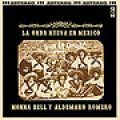
For the cover, Guillermo Acosto had the idea of taking sepia toned photos of the project’s protagonists dressed as Mexican revolutionaries from the early 20th Century. A photo session was arranged in the center of an old hacienda on the outskirts of the capital. What they did not take into account was that, to the touchy Mexican government, in a way the photos appeared insulting for ridiculing the image of a government born in the heart of the revolution. A call to attention by the Ministry of the Interior put the record’s promotion even further onto the sidelines, and it received very poor reception after its release because radio stations refused to promote it. The 3,000 copies pressed barely sold. Musart’s sub-label, Trébol, reedited it a year later with a less scandalous cover, arranging the songs in a different order and re-naming it “Mona Bell canta a Mexico” in the hopes of giving it a second chance and recovering some of the costs given that the recording ended up being so costly because of the musicians involved. Nevertheless, the music world saw the record as a brilliant effort, and congratulations from personalities such as Rubén Fuentes, Chucho Zarzoza, Juan García Esquivel and Nacho Rosales, all of whom were top figures of the Mexican music industry, came right away.
Aldemaro left for Caracas to promote the Primer Festival Internacional Onda Nueva, pleased with the results. For a few years now “La Onda Nueva en Mexico” has remained a cult object among those searching for “rare grooves” because of its unique cover, and above all, for its completely unique concept of combining traditional Mexican music arranged by a cosmopolitan Venezuelan influenced by Bossa Nova, sung by a Chilean pop singer and orchestrated by Mexican jazz musicians, all on one record. A complete artistic achievement recovered by VampiSoul 37 years later.
|
|





 Wish List


